Hello Neighbor Nicky's Diaries
- 4.1
- Rating
- 10.00M
- Installs
- Free
- Price

 Analysis by App-foxy
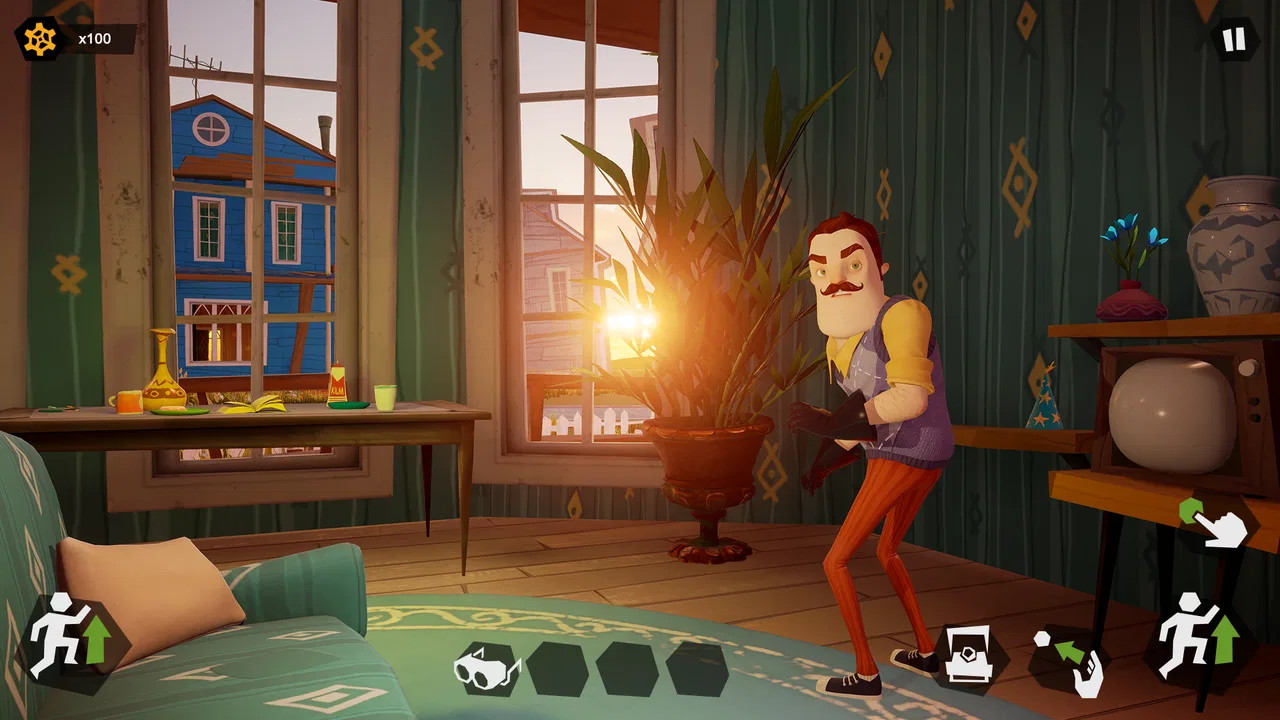
I spent time with Hello Neighbor Nicky's Diaries expecting a compact stealth adventure, and that is the right way to approach it. This is not a relaxed puzzle game that lets me wander without pressure. It puts me in the role of sneaking, observing, experimenting, and trying again while dealing with the uneasy presence of the Neighbor. The result is a game that can be genuinely absorbing when I am in the mood to study a space, but noticeably less comfortable when I want quick, predictable progress.
As an adventure game from tinyBuild, it sits in a familiar universe while presenting itself as a spin-off rather than simply repeating the original experience. It is free to start, rated Everyone 10+, and requires iOS or Android 11 or later. The game arrived on December 6, 2023, and version 1.4.4 is the version I found during my review. Its average rating is 4.1 from roughly thirty-six thousand ratings, and more than ten million people have installed it, so there is clearly a large audience for this particular style of tense exploration.
How the first goals shape the adventure
The opening hours work best when I treat every objective as a reason to understand the environment rather than as a simple errand. I am not only moving toward a marked destination. I am learning which routes feel safe, which spaces deserve a closer look, and how much noise or exposure I can risk before the situation turns against me. That makes the early goals useful because they teach the game’s rhythm through action instead of burying the player in instructions.
You May Also Like

 Blood Strike: 2.5 Anniversary
Blood Strike’s Loadouts Turn Every Drop Into a Tactical Gamble
A close look at Blood Strike’s custom loadouts: how fast access to signature weapons reshapes its battle royale rhythm, rewards preparation, and narrows the gap between fights.

 Pandora - Music & Podcasts
Pandora’s Music Is Easy to Start, but Harder to Recover
Pandora’s strength is its low-effort path from a seed to a station. Its weak spot is how much confidence it asks you to place in connection, setup, and quiet recovery.

 8 Ball Pool
 Is Built on Rivalries, Rematches, and Routine
A close look at the rivalries, rematches, shared routines, and unanswered safety questions that turn a quick pool match into a persistent mobile community.

 Samsung Music
’s Quiet Strength Is Playing What You Already Own
Its reach comes less from spectacle than from dependable access to a personal library. That simplicity is both the app’s strongest retention engine and its ceiling.

 AccuWeather: Weather Radar
AccuWeather Review: A Quick, Clear Forecast for Everyday Decisions
For everyday plans, the best forecast is the one you can understand quickly. AccuWeather makes rain timing, radar, and local conditions easy to act on, with a few trade-offs.

 Hill Climb Racing
Why Hill Climb Racing Still Turns Crashes Into One More Run
A tiny car, a bumpy hill and one more upgrade: Hill Climb Racing keeps resurfacing because its simple chaos makes every near-miss feel personal.
More From Our News Desk
View All News


My first instinct in a stealth adventure is usually to move quickly, but that approach creates unnecessary problems here. I found it more effective to pause at doorways, inspect the layout, and decide whether I was committing to a direct route or looking for a quieter alternative. This small change in attitude makes the game feel more deliberate. The objective may appear straightforward, yet reaching it safely is often the real task.
That early learning process is one of the strongest parts of the design. The game encourages me to connect observation with movement: notice something unusual, test a possibility, then retreat if the result is too risky. I never felt that simply walking forward was the complete solution. Even when an objective itself was clear, the route toward it required judgment.
A useful everyday example is playing during a short break with headphones on. I can begin with the intention of completing one small goal, but I quickly discover that the game rewards attention more than speed. If I am distracted by messages or trying to play while watching something else, I make poorer decisions and repeat sections. For a focused ten-minute session, that tension can be entertaining. For casual multitasking, it can feel demanding.
What progress feels like in practice
The most satisfying progress signal is not a large collection of rewards. It is the moment when a space that initially felt confusing becomes readable. I start recognizing useful landmarks, remembering where I made a mistake, and planning a route before moving. That knowledge is a real form of advancement, even when the game is asking me to repeat an area.
This matters because the experience depends heavily on player understanding. Someone looking for constant unlock notifications or a long list of equipment improvements may find the progression less immediately visible. The game’s forward movement is tied closely to solving situations and becoming more capable at interpreting them. I often knew I was improving because I was making fewer careless choices, not because the interface was celebrating every step.
There is also a practical lesson in how I handled failed attempts. Instead of restarting with a completely new plan every time, I changed one variable: the entrance I used, the timing of my movement, or the amount of exploration I attempted before pursuing the objective. That method made retries feel informative. Random experimentation was much less effective than remembering what the previous attempt had revealed.
For new players, I recommend treating the first failed run through an area as reconnaissance. Do not spend the entire attempt trying to finish. Notice the structure, identify the dangerous moments, and remember where you lost control. On the next attempt, use that information rather than rushing to prove that the first mistake was a fluke. This is one of the clearest ways to make the progression feel fairer.
The challenge curve rewards patience, not reflexes
The difficulty is built around pressure and uncertainty more than fast reactions. I usually had enough time to think when I stayed calm, but panic made ordinary movement feel complicated. That distinction is important: the game can seem harsher than it really is if I react emotionally to being discovered or if I insist on forcing a route that has already gone wrong.
I appreciated that the challenge pushed me to improve my process. I learned to separate exploration from commitment. First I looked around and formed a rough plan; then I attempted the objective with fewer unnecessary movements. This two-stage approach saved time and made the game’s stealth tension more manageable.
Still, the same design can frustrate players who prefer immediate clarity. When I was unsure whether I had missed a clue, misunderstood the intended route, or simply executed badly, a retry could feel less useful. The game is at its best when I can infer what went wrong. It is weaker in moments where the feedback does not immediately explain why my approach failed.
Touch controls also influence this curve. On a phone, careful movement and camera adjustments require more concentration than they would with a physical controller. I found that a larger screen made observation easier, while a smaller display increased the chance of overlooking something important. This is not a reason to avoid the game, but it does mean that device comfort affects the perceived difficulty.
Players who normally enjoy stealth puzzles should adapt quickly. Players who mainly want an action adventure with generous checkpoints and constant momentum may need more patience. I would not recommend starting it when I am already irritated or tired, because the game asks me to learn from mistakes rather than shrug them off.
Why the pacing keeps me playing
The pacing works through a cycle of curiosity, caution, failure, and adjustment. I became interested in what was beyond the next obstacle, then slowed down because reaching it safely mattered. A failed attempt created a reason to try again, provided I understood something new from it. That loop is more compelling than simply collecting rewards because the environment itself becomes the puzzle.
There is a fine balance here. Repetition can sustain attention when each attempt produces a clearer plan. It becomes retention pressure when I repeat the same sequence without learning anything useful. I noticed that my enjoyment depended on whether I could identify a specific improvement before restarting. If I could say, “Next time I will approach this differently,” I was willing to continue. If I could not, the loop lost energy.
This makes the game particularly suitable for players who enjoy mastering a route over several attempts. It is less suitable for someone who expects every session to deliver a fresh location, a major unlock, or a dramatic story beat. The appeal is concentrated in solving the immediate problem and gradually reducing uncertainty.
The free entry point is helpful for deciding which kind of player I am. I can try the core experience without paying upfront, then decide whether the structure suits me. The game includes in-app purchases priced at $6.99 per item, so I would approach spending carefully and first establish whether I enjoy the repeated stealth-and-discovery loop. A free download does not automatically mean the full experience will match every player’s expectations.
I also think the age rating deserves a practical explanation. Everyone 10+ suggests a family-accessible presentation, but the tension can still be uncomfortable for younger or more sensitive players. The pressure comes from being watched, caught, and forced to rethink a plan. Parents choosing it for a child should consider whether that style of suspense is welcome, rather than judging suitability only by the absence of extreme content.
Where it stands beside other adventure games
Compared with a conventional mobile adventure built around direct movement, obvious objectives, and frequent rewards, this game asks me to do more mental work. I spend less time simply traveling from one marker to another and more time deciding how to approach a space. That gives it a stronger identity, but it also removes some of the convenience people expect from short mobile sessions.
Compared with pure puzzle games, it adds the stress of being observed and the possibility that a good idea can fail because of poor timing or positioning. That makes solutions feel more personal, but it can also make the experience less relaxing. If I want a calm logic challenge, another adventure or puzzle title would probably suit me better. If I want the satisfaction of applying a plan while under pressure, this is the more interesting choice.
It also differs from action-focused stealth games. The emphasis is not on overpowering obstacles or relying on rapid combat decisions. My advantage comes from paying attention, choosing a route, and learning from mistakes. That is why the game can appeal to players who enjoy stealth without wanting a heavily combat-centered experience.
The trade-off is that the game’s strengths are closely tied to its friction. The same uncertainty that makes discovery engaging can make the experience feel vague. The same retries that build mastery can feel repetitive. I would choose this over a more automatic adventure when I want involvement, but I would choose a simpler alternative when I only have a few minutes and want guaranteed progress.
Small habits that make a large difference
My first practical tip is to avoid exploring every corner during a high-pressure attempt. I used early runs to understand the area and later runs to pursue the objective. Mixing those purposes made me take unnecessary risks. Separating them gave each attempt a clear job and made failures easier to interpret.
Second, I recommend remembering landmarks rather than trying to memorize an entire route. A distinctive doorway, room arrangement, or visual reference can be enough to rebuild the plan. This is more reliable than attempting to remember every turn, especially on a phone where camera movement can change my sense of direction.
Third, when a plan fails, change only one major decision at a time. If I altered the route, timing, and exploration pattern together, I could not tell which adjustment helped. Keeping the experiment controlled turned retries into a learning process. That approach is especially useful for players who feel that stealth games are unfair when they are actually still learning the environment.
Finally, I found it better to stop after a genuinely frustrating failure than to continue automatically. Because the game depends on attention, tired repetition rarely improved my performance. Returning later with a fresh plan was more productive than forcing another attempt while annoyed.
Who should play and who should skip it
I would recommend this game to players who enjoy the Hello Neighbor setting, stealthy exploration, and objectives that require planning instead of constant action. It is a good fit for someone who likes gradually understanding a space and does not mind repeating a situation to improve. The spin-off format also makes it approachable for people curious about the universe without demanding that they treat it like a conventional action title.
I would be more cautious recommending it to players who dislike being caught, repeating sections, or working out what went wrong without immediate explanation. It is also not my first choice for a completely relaxed mobile session. The tension is part of the appeal, and removing that tension would remove much of what makes the game distinctive.
Device choice matters too. A newer phone or tablet running the required operating system should make the visual details and movement easier to manage, while a cramped screen can make careful observation more tiring. I would also use headphones when possible, not because the game becomes impossible without them, but because focused audio and fewer distractions support the kind of attention the design expects.
My progression verdict
After playing it, I think the progression succeeds when measured by growing player understanding. The early goals give me a reason to inspect the world, the progress signals come from better decisions, and the challenge curve encourages patience. Its retention loop is strongest when every failed attempt reveals something that changes my next plan.
That approach will not satisfy everyone. Players who want visible unlocks, rapid rewards, or uninterrupted forward motion may find the pacing too cautious. The in-app purchase structure also gives me a reason to avoid spending until I know the free experience fits my preferences. I would not treat the large install base or solid average rating as a substitute for trying the actual loop, because enjoyment here depends strongly on personal tolerance for stealth pressure and retries.
For me, the game is worth trying because it gives mobile adventure play a clear personality. It asks me to observe before acting, turn mistakes into information, and accept that progress may be measured by confidence rather than spectacle. The best reason to keep playing is the feeling that a confusing situation is gradually becoming solvable. If that kind of careful, tense problem-solving sounds appealing, tinyBuild’s spin-off is an easy recommendation to test. If I want a faster, more generous adventure, I would choose a different style of game instead.
FAQs for Hello Neighbor Nicky's Diaries
01What is Hello Neighbor Nicky's Diaries about?
Hello Neighbor Nicky's Diaries is a unique combination of stealth and puzzle-solving, set in a mysterious neighborhood. Players assume the role of Nicky, who is determined to uncover the secrets hidden in his neighbor's house. With its engaging storyline and immersive gameplay, it keeps players on the edge of their seats.
02Is Hello Neighbor Nicky's Diaries suitable for all ages?
While Hello Neighbor Nicky's Diaries is designed for a broad audience, it may not be suitable for very young children due to its suspenseful themes and mild jump scares. It's best suited for players who enjoy a mix of mystery and strategy. Parents should review the content to determine age appropriateness for their children.
03What platforms is Hello Neighbor Nicky's Diaries available on?
Hello Neighbor Nicky's Diaries is available on both Android and iOS platforms. This ensures accessibility for a wide range of users, allowing them to enjoy the game on their preferred mobile devices. Check the respective app stores for compatibility with your device version.
04Does Hello Neighbor Nicky's Diaries require an internet connection to play?
Hello Neighbor Nicky's Diaries primarily offers offline gameplay, allowing players to enjoy the game without a constant internet connection. However, certain features, like updates or in-game purchases, might require internet access. It's advisable to check the app settings for specific connectivity needs.
05Are there any in-app purchases in Hello Neighbor Nicky's Diaries?
Yes, Hello Neighbor Nicky's Diaries includes in-app purchases that can enhance the gaming experience. These purchases may offer additional content, hints, or other bonuses. Players can enjoy the game without them, but the extras can provide a richer experience. It's important to manage purchases, especially for younger players.
Pros
- Engaging storyline keeps players hooked.
- Clever puzzles that challenge your logic.
- Impressive graphics enhance immersion.
- Intuitive controls for smooth gameplay.
- Frequent updates with new content.
Cons
- Requires a stable internet connection.
- Can be resource-heavy on older devices.
- Some puzzles may feel repetitive.
- In-app purchases can get pricey.
- Occasional bugs disrupt experience.

Hello Neighbor Nicky's Diaries
Gallery